


CEFR LEVELS
Common European Framework of Reference for Languages
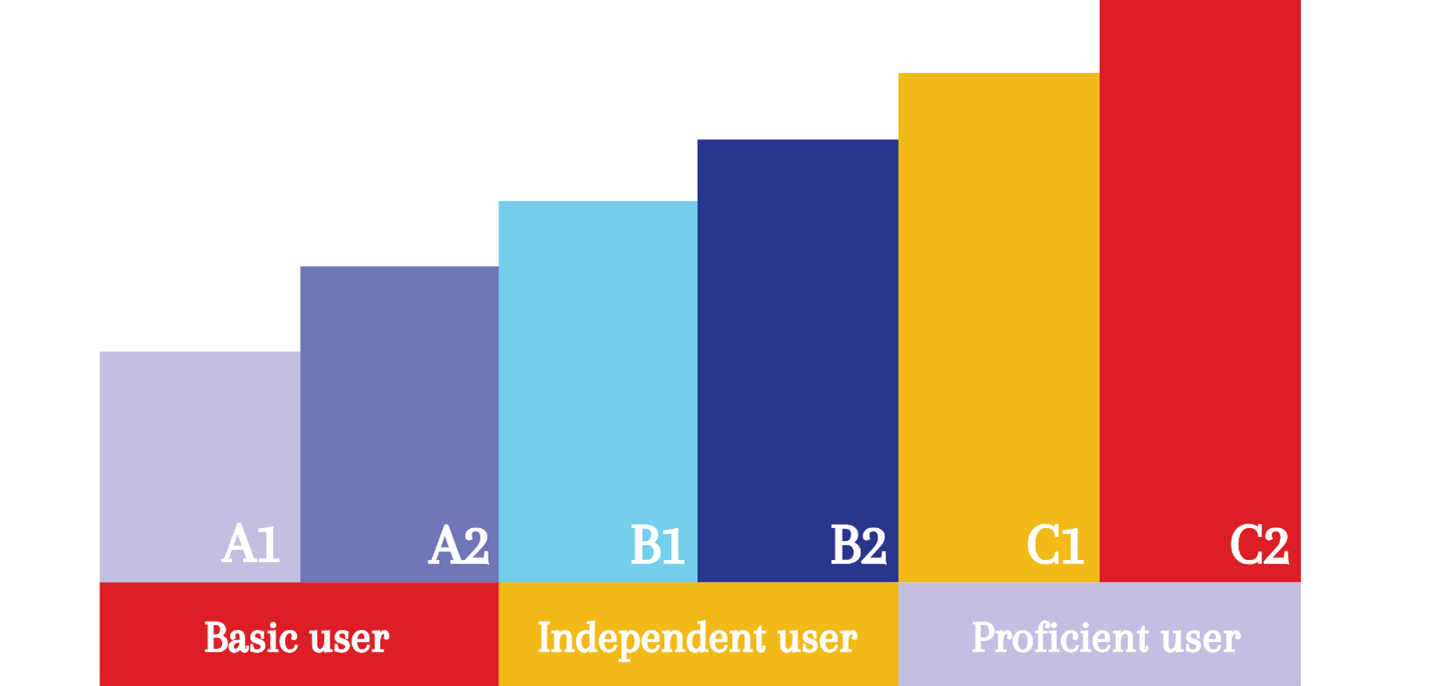
At Dialecta language school, languages are taught in accordance with the Common European Framework of Reference for Languages (CEFR). For non-European languages offered at our school, such as Japanese and Chinese, we use specific frameworks like HSK (Chinese) and JLPT (Japanese) for level distribution. This framework provides a standardised approach to language learning, offering our students the opportunity to acquire high-quality knowledge recognised internationally.
About CEFR Levels
The Common European Framework (CEF) serves as a foundational tool across Europe for creating language syllabuses, curricula, exams, as well as textbooks. CEFR defines various levels of language competence, from basic to advanced skills, describing what a learner can achieve at each level. The framework offers a unified approach and helps overcome educational disparities among European languages, fostering collaboration among educators, administrators, and examination bodies, all with the goal of meeting the needs of learners.
Unlike multilingualism, plurilingualism is a central concept in the philosophy of the CEFR. It refers to an individual's ability to use multiple languages or combine different linguistic elements to communicate effectively. Plurilingualism involves integrating language resources from different languages into a cohesive whole, emphasizing individuality, cultural connection, and the linguistic skills of the learner. The framework supports lifelong language learning and encourages educational institutions to offer numerous language options and motivate students. It serves as a fundamental tool for educators and learners to track and recognise their language achievements.
This approach acknowledges that language skills develop through the use of language in various social situations and views learners as social agents who use language. It emphasizes the importance of practical language application in real-world situations and activates the cognitive, volitional, and emotional resources of the individual. It encourages fluid use of language in different contexts, leading to the lasting acquisition of language skills.
To better explain the levels of language competence—Basic User (A1 and A2), Independent User (B1 and B2), and Proficient User (C1 and C2)—below are general guidelines and brief descriptions of the ‘can do’ statements for each level on the CEFR scale:
| A1 |
Can understand and use familiar everyday expressions and very basic phrases aimed at the satisfaction of needs of a concrete type. Can introduce him/herself and others and can ask and answer questions about personal details such as where he/she lives, people he/she knows and things he/she has. Can interact in a simple way provided the other person talks slowly and clearly and is prepared to help. |
| A2 |
Can understand sentences and frequently used expressions related to areas of most immediate relevance (e.g. very basic personal and family information, shopping, local geography, employment). Can communicate in simple and routine tasks requiring a simple and direct exchange of information on familiar and routine matters. Can describe in simple terms aspects of his/her background, immediate environment and matters in areas of immediate need. |
| B1 |
Can understand the main points of clear standard input on familiar matters regularly encountered in work, school, leisure, etc. Can deal with most situations likely to arise whilst travelling in an area where the language is spoken. Can produce simple connected text on topics which are familiar or of personal interest. Can describe experiences and events, dreams, hopes & ambitions and briefly give reasons and explanations for opinions and plans. |
| B2 |
Can understand the main ideas of complex text on both concrete and abstract topics, including technical discussions in his/her field of specialisation. Can interact with a degree of fluency and spontaneity that makes regular interaction with native speakers quite possible without strain for either party. Can produce clear, detailed text on a wide range of subjects and explain a viewpoint on a topical issue giving the advantages and disadvantages of various options. |
| C1 |
Can understand a wide range of demanding, longer texts, and recognise implicit meaning. Can express him/herself fluently and spontaneously without much obvious searching for expressions. Can use language flexibly and effectively for social, academic and professional purposes. Can produce clear, well-structured, detailed text on complex subjects, showing controlled use of organisational patterns, connectors and cohesive devices. |
| C2 |
Can understand with ease virtually everything heard or read. Can summarise information from different spoken and written sources, reconstructing arguments and accounts in a coherent presentation. Can express him/herself spontaneously, very fluently and precisely, differentiating finer shades of meaning even in more complex situations. |
At Dialecta, as well as in many other language schools and institutions worldwide, a more detailed sub-level scale can give you better insight into your level of language competence and the number of hours (excluding independent study) required to reach each level. These sub-levels vary depending on the language you are learning, its complexity, script, grammar, etc. Below, you can find our sub-level distribution for each language we offer.
Each sub-level is completed through one course, which consists of 24 hours (or Dialecta lessons), regardless of the type of course. The sub-level structure differs for each language, as shown below:
English
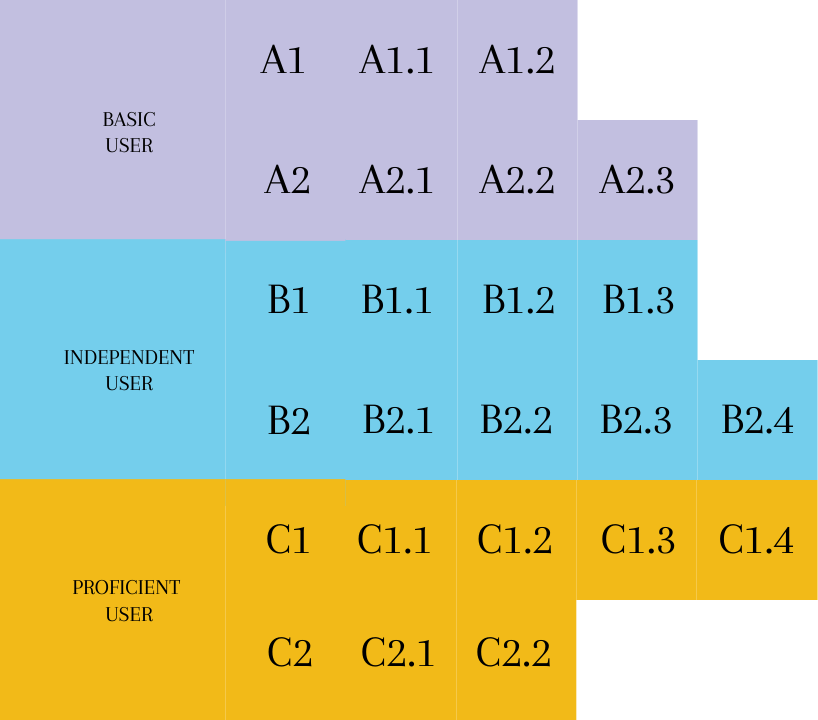
French
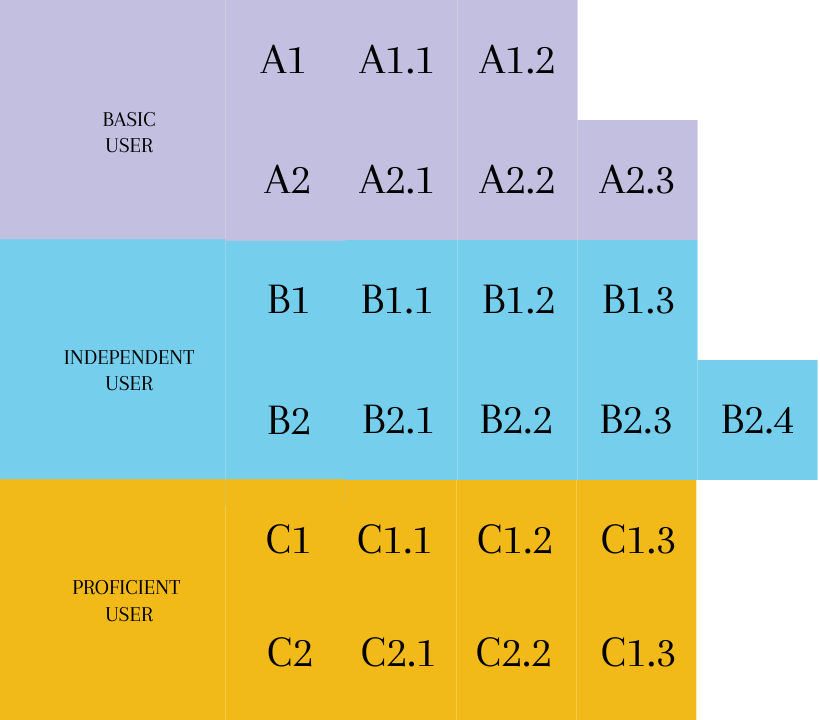
Spanish
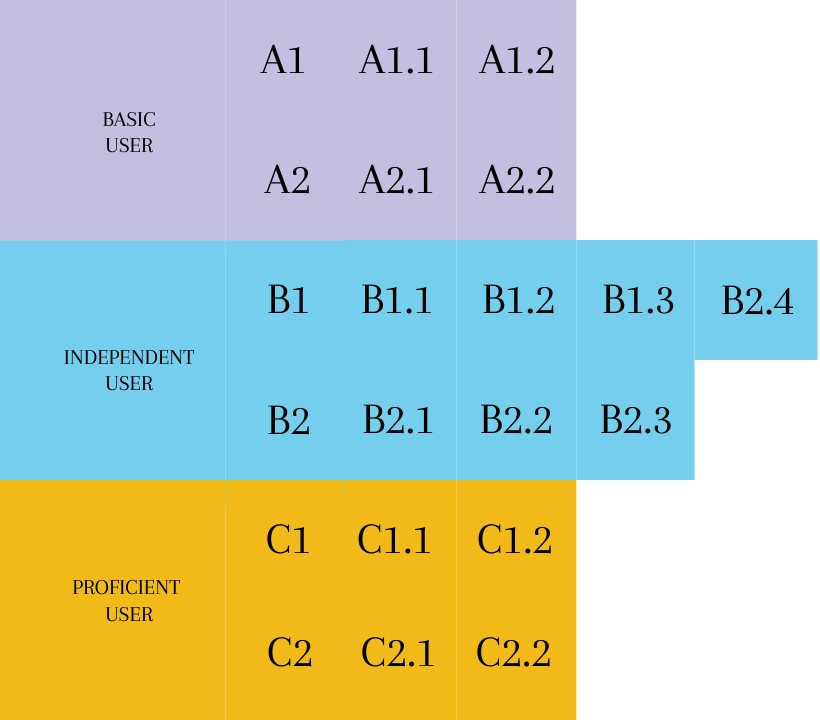
Italian
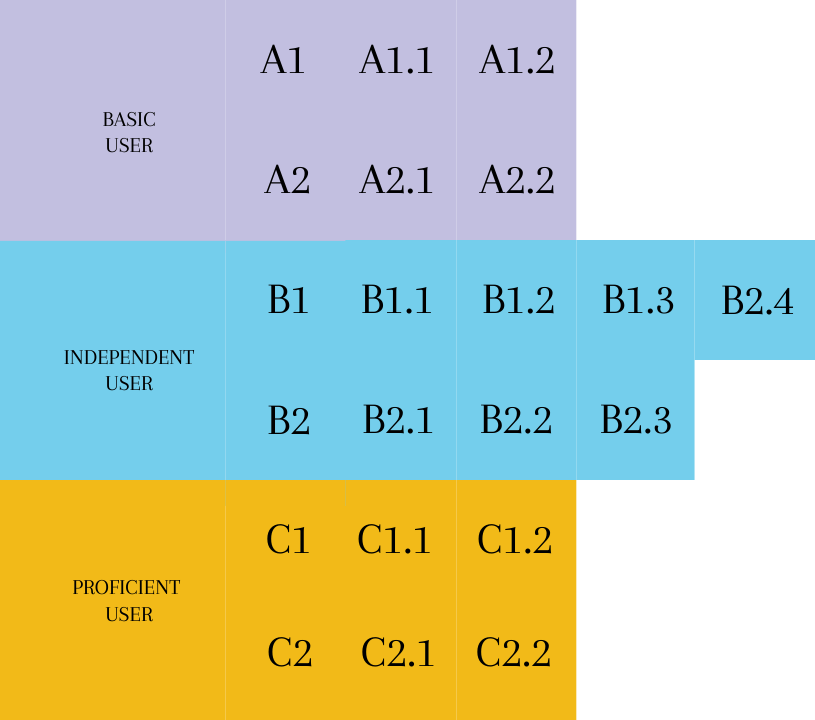
German
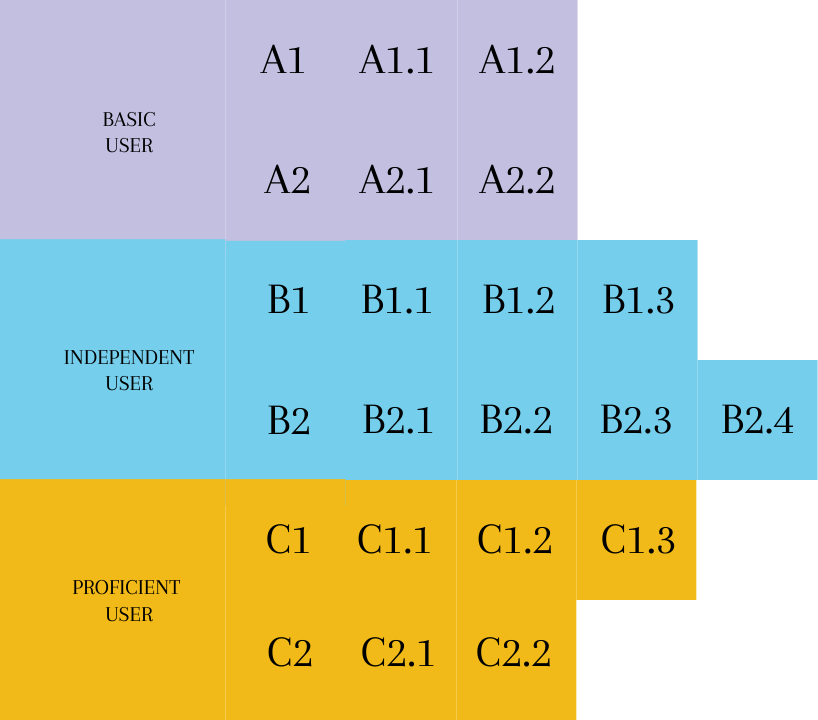
Russian
Serbian
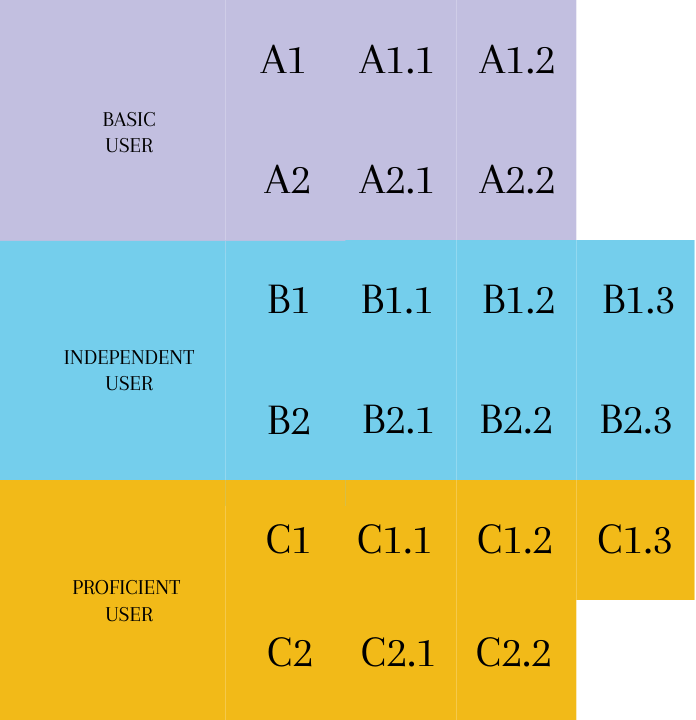
Chinese
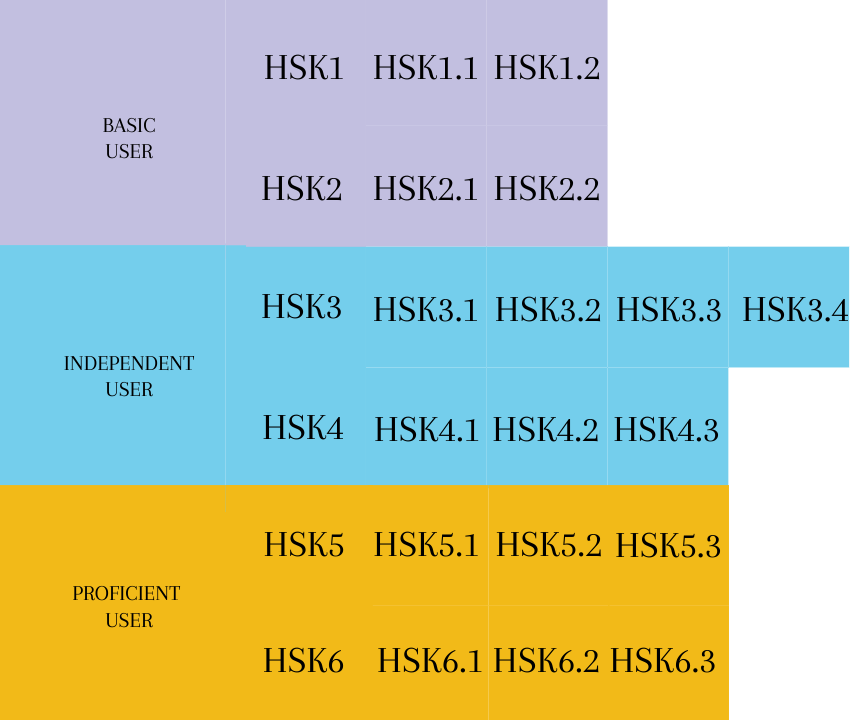
Japanese
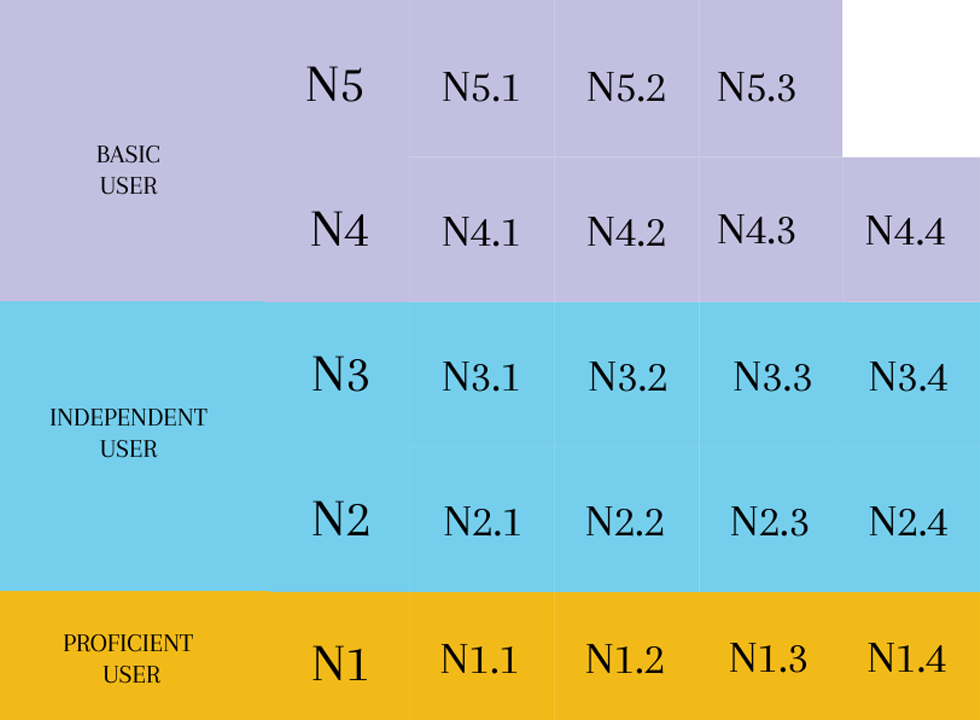
*This distribution applies only to adult language learners.